Remember that Autumn has narrower limits than Summer as to the distance you can travel and still return in daylight. What may have seemed a short enough route in Summer can become an unwelcome lengthy trail in Autumn as the days shorten and the sun sets earlier. The best route is one that allows time to search for signs of wildlife and to travel safely, arriving back at your car when you intend to, even if that means returning early.
Treat daylight as a fixed boundary
Plan your trip to get back in time for closing gates, last buses, whatever your limit is. Work back from this time to include time for parking, putting on your shoes, navigating to the start of the route, taking breaks and dealing with unexpected problems such as path closure or a bad crossing. (Unexpected problems are the norm when walking in Autumn.)
When walking in the autumn, routes need an extra margin of daylight, because as you start off, circumstances on the ground can change. In low light it is more difficult to spot things like roots, loose rock and shallow depressions in the ground. Leaves on the ground can cover up familiar edges to the path. The return to a junction can be difficult in fading light, making an otherwise short route too long for the amount of daylight available.
Plan to turn around at a certain time before you leave. Set your alarm and if necessary, make sure you have time to get to the trailhead before it goes off. This is part of your planning, not a failure on the trip.
Match the route to the day's purpose
If your objective for your outing is exercise then choose a route of a suitable length and include interesting features along the way. If your objective is to observe wildlife then a shorter route with places to stop and view would be more appropriate. If your intention is to inspect habitat or to travel to and from a legal hunting area then the route should contain reliable features to aid return and include important landmarks.
Please also familiarize yourself with current public-land guidance, as well as posted access notices and other safety-related information. Such data can change at any time, so verify this type of information with the relevant official agency as needed for each season. Just because you have gone hunting in a particular area in years past does not necessarily mean that current rules and regulations for access to public land for that activity still apply.
You are better to have a route with many possible exits to a main trail than to have a remote trail that only goes in one direction. The timing of such a remote trail would have to be very conservative.
Read terrain before reading distance
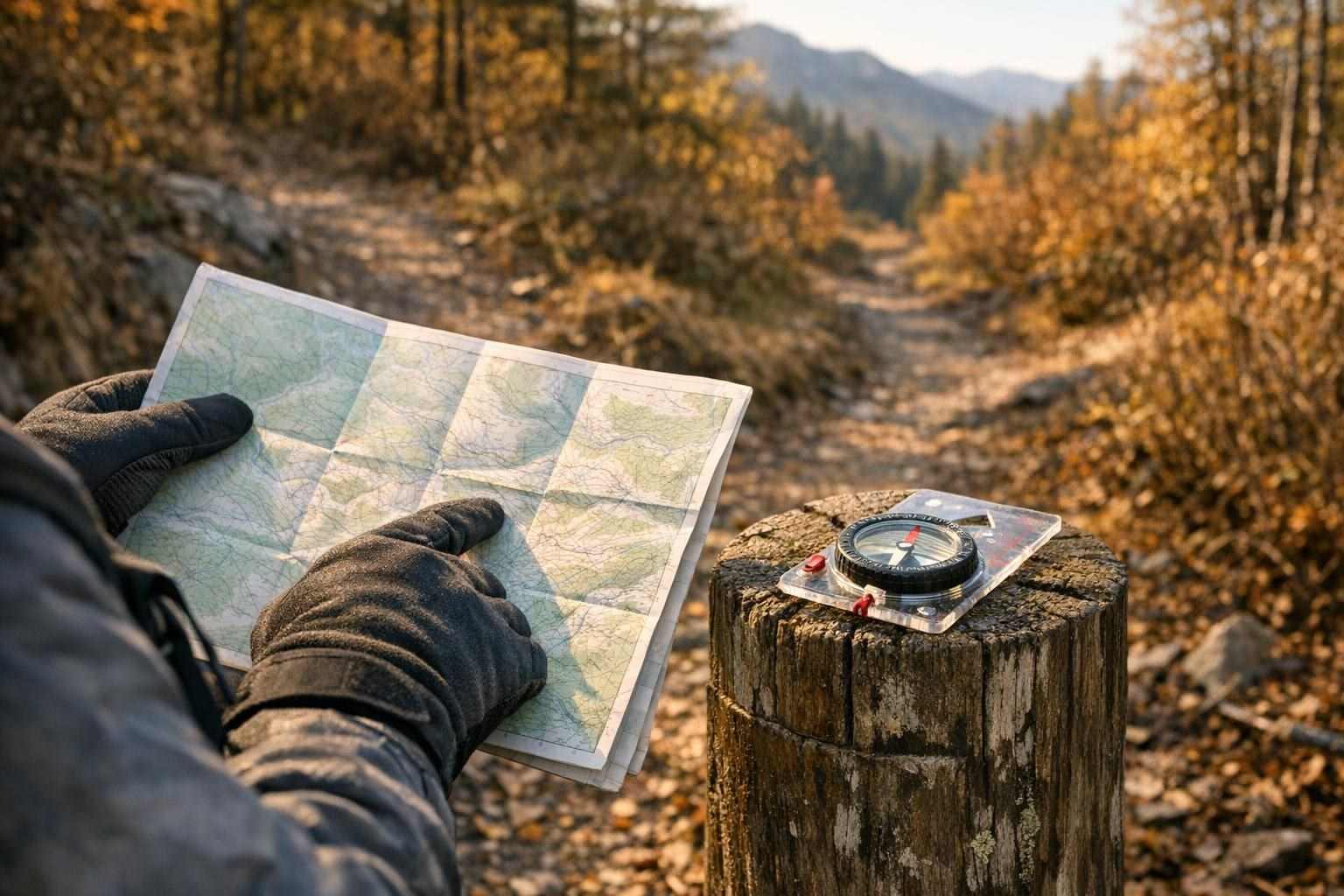
A trail may look like a short jaunt in on a map but actually be quite arduous in real life, particularly if you are including up and down slopes of rough surface and numerous stream crossings, i.e. cross hatching etc. Note elevation changes, stream crossings, denser vegetation etc. on the map before agreeing on the distance of a short day's outing.
On Lookout Mountain or similar terrain, consider where a wrong turn could cost more time in recovery than another route of comparable length would save. Be particularly aware of decisions made descending a long route and where that long ascent up would be in returning. Mark these on the map, and note where you would be on the route, and the direction of travel, at each of these.
Even recent maps and information provided by land-managers should be treated as planning aids and not as absolute facts. Other factors such as recent storm damage, recent road works, fallen trees etc can all impact a route within hours. Be aware of the state of key features of your route such as bridges, gates and even very narrow paths. Have an alternative route planned for such.
Keep gear simple, but cover the weak points
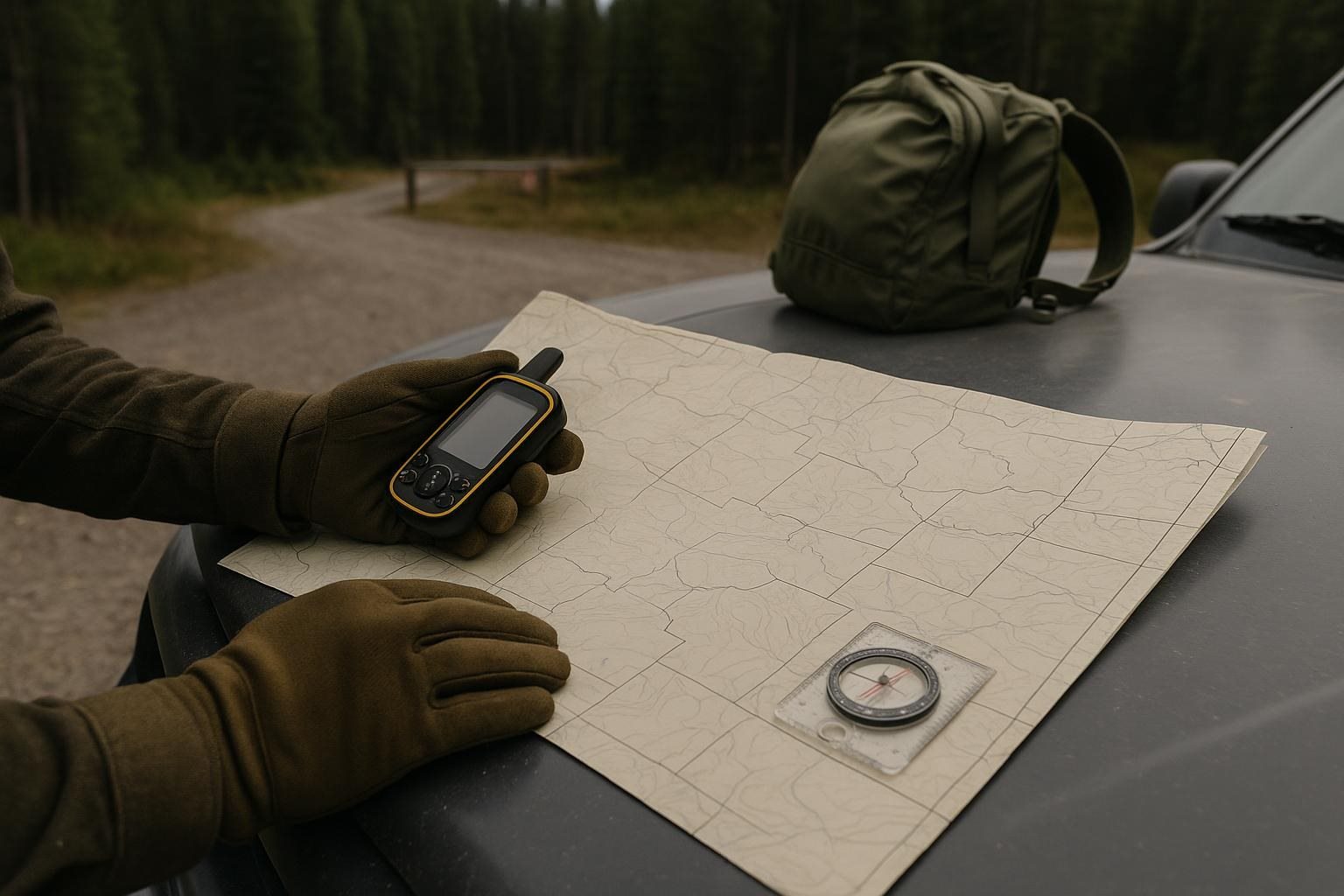
For short trips during short days, no need for a huge pack. Bring phone, light, water, some first aid supplies, and an extra layer. A paper map is always better than to rely on a battery powered device.
Wear appropriate shoes for the kind of surface you expect to encounter and not for the current weather. Bring the rain gear, even if the forecast does not call for any. Keep your change of clothes for cold weather Moisture protected. For activities that involve carrying of equipment for hunting, pack all your gear to keep it safe. Organize your gear to ensure that you can easily locate your navigation tools, water and any other emergency items when you need them.
Be visible when traveling through hunting country, but be sure to adhere to current local regulations with respect to wearing clothing with blaze orange. In many states hunters wear blaze clothing and observe certain seasons and/or times of day. Be sure to check local requirements, observe posted signs and DO NOT ENTER private property that is clearly posted as such. And, as always, obtain permission in advance to access private property for exercise or hunting purposes.
Plan the return, not just the destination
However the journey back to your vehicle can affect your experience, especially if you have been for a long walk up steep hills, and you are tired. Additionally in poor light and in wet conditions the journey back can take longer than expected.
Record the sequence of turns for the route you have taken. Also take note of any special turns, such as sharp bends, crossings and trail junctions. While traveling with friends it is a good idea to decide on a time to head back and what to do if someone gets lost along the way.
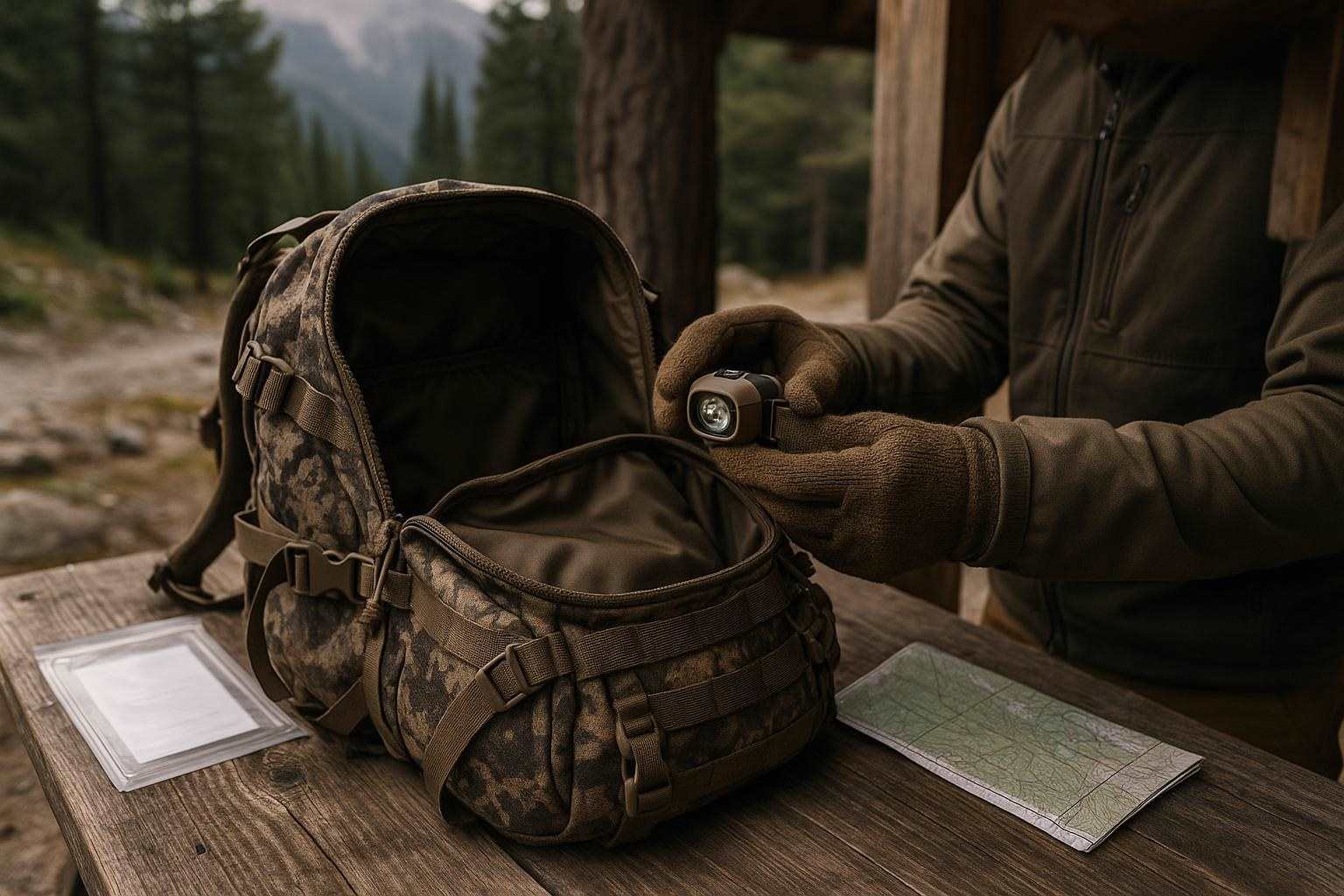
Remember to bring a headlamp. Make sure it works before leaving home. It is also wise to bring spare batteries. And make sure to bring it with you, not put it in the bottom of your bag. A small delay on the trail can turn into a serious problem when it gets dark.
Leave the ground better than you found it
Respect the natural environment along the route and do not leave a trail of destruction behind you. Use established paths, stay on durable surfaces, do not widen trails and avoid making "improvements" such as cutting switchbacks. Even what at first seems like a minor shortcut can end up further deteriorating the trail as more people use it.
Also keep in mind that you can go to affect the environment negatively while you're out for a day's hiking. Keep distance from wildlife, do not disturb natural objects and do not remove plants and minerals. Take all food scraps etc. with you. Additionally, respect fences, gates, quiet areas and seasonal restrictions in hunting countries and follow posted directions for access to public-land areas. Enjoy the natural beauty of the environment and leave it as you found it.
Let someone know the route you will be taking as well as your expected time for return. It would be a good idea to provide the person with the access point, the make of your vehicle, and an alternate route should something happen along the way and you are unable to complete the originally intended route.
In order to have the best autumn trip possible, you must first plan an easy enough route in order to allow for unexpected problems. Cut your route short if it is unfamiliar or the weather is worsening. It is far better to have seen little and returned safely than to have had to walk a long way in bad weather and returned late at night.